
Gallup Court Docket Searches
Eligible city records have their own access channel at Gallup Municipal Court. A Gallup traffic citation, ordinance case, petty misdemeanor, code matter, or animal-control case has one starting point. Begin at the Gallup Municipal Court public portal. The City of Gallup announced remote access for eligible records in May 2026. Restricted records stay excluded. Confirm the portal's current fields and options on the live service before relying on a result.
State cases take a different route. Start with New Mexico Case Lookup. It offers free public summary information for listed court systems. A known case number works best. If the search returns no city result, do not assume the matter is absent from the docket. Confirm the court type and location first.
- Identify whether the event arose from a Gallup city matter or a state-court matter.
- For an eligible city matter, open the Gallup Municipal portal and use the case or citation information the city instructions request.
- For state court, use Case Lookup with the name or full case number and the relevant court-type filter.
- Read the court, status, event, and hearing information that is publicly visible.
- Contact the Gallup court clerk that holds the case to confirm a setting or request an official copy.
Gallup Municipal Portal Access
Think of the Gallup portal as a local city route, not a substitute for New Mexico's statewide Case Lookup or registered re:SearchNM. The City's announcement says eligible Municipal Court records can be reached remotely. Restricted records are left out. That line matters. The Gallup portal does not open District Court, Magistrate Court, Probate Court, federal, or sealed records by default, so a docket search there covers city matters only.
The City's portal-launch notice explains the remote-access statement directly. Verify search fields, record eligibility, and payment options on the live service. The city offers no public export or document-download feature for its court records.
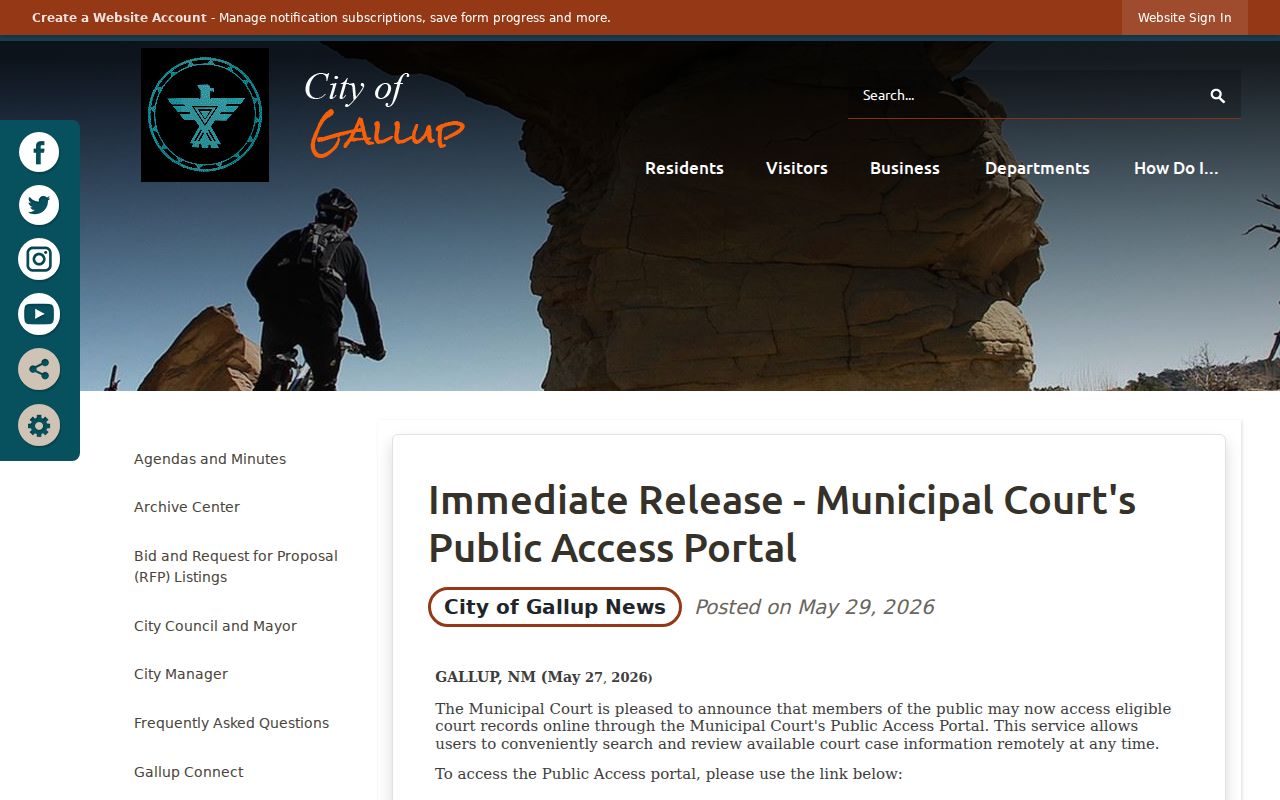
The launch notice adds a Gallup court-record path while keeping the city's access restrictions intact.
Inside the Gallup Municipal Court
Gallup Municipal Court hears city traffic and ordinance violations. It also takes petty misdemeanors, code-enforcement matters, animal-control violations, and city-jurisdiction DWI matters. It does not handle small claims, divorce, child support, or domestic violence and protection orders. A city ticket can arise in Gallup. So can a state traffic case. The two can land in different courts. Read the court's title on the notice rather than trusting the city name alone.
The official Gallup Municipal Court page posts the court's contact route and jurisdiction. Payment methods and judge information appear there too. The official page gives 451 Boardman Drive; a city directory gives 451 State Road 564. Those street labels conflict. Call the court before visiting. A clerk can confirm the right address.
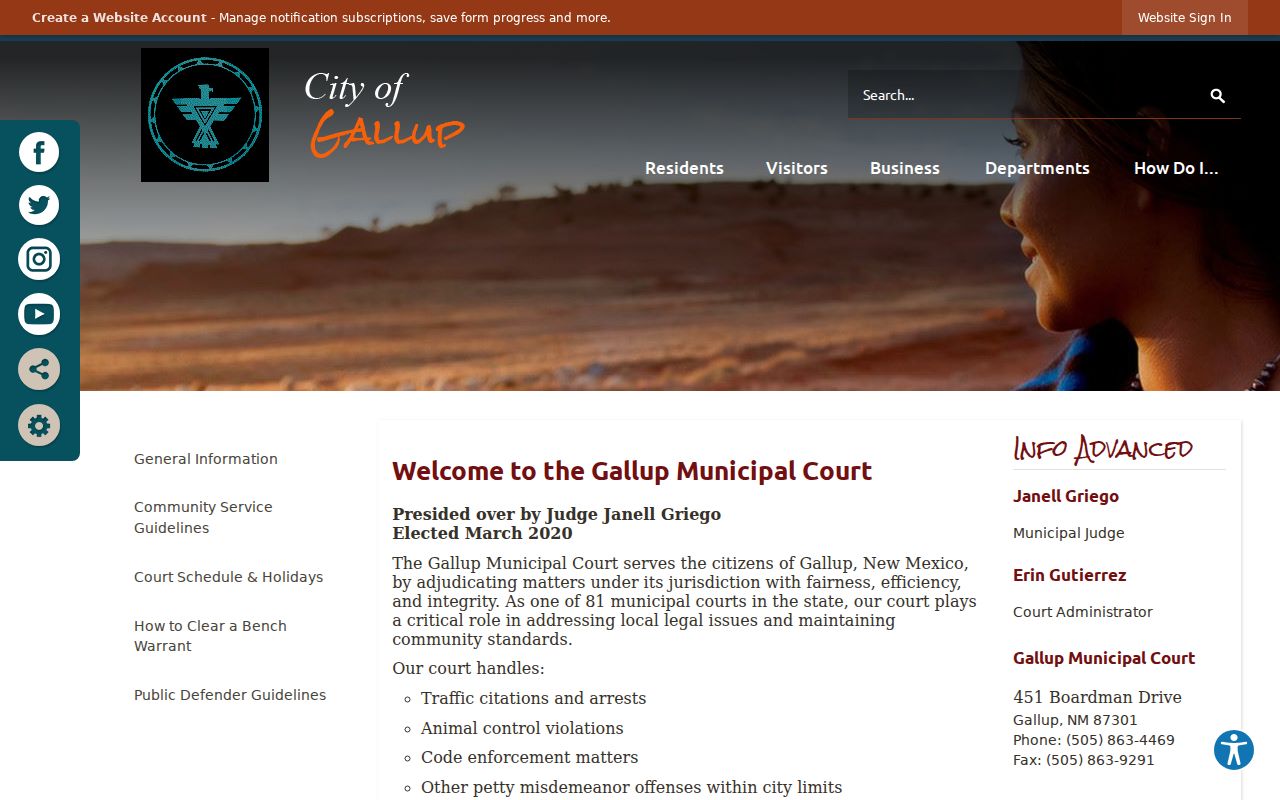
For a Gallup Municipal case, citation, payment, or clerk question, the city court's own information page is the place to start. It answers most docket and filing questions directly.
Gallup Court Record Custodians
Gallup is the county seat, and its courts sit close together. Even so, the records are not pooled into one local clerk file. McKinley County District Court holds the general-jurisdiction cases. Gallup Magistrate Court holds limited-jurisdiction state cases, including traffic and DWI. Probate records sit with McKinley County Probate Court. Gallup Municipal Court keeps the city matters. Each court runs its own clerk and record process. So the first step in any docket search is picking the right courthouse.
| Gallup court | Typical record | First record route |
|---|---|---|
| Gallup Municipal Court | City traffic, ordinance, petty-misdemeanor, code, and animal-control cases. | Municipal portal or Municipal clerk. |
| Gallup Magistrate Court | State traffic, DWI, misdemeanors, felony preliminaries, and limited civil matters. | Case Lookup or Magistrate clerk. |
| McKinley District Court | Felony, domestic, larger civil, juvenile, and appeal records. | Case Lookup, re:SearchNM if eligible, or District clerk. |
| McKinley Probate Court | Informal probate and designated appointment matters. | Probate Court contact. |
Finding Gallup Court Dates
A Gallup court date can surface in several places. Look to a Municipal schedule, the District or Magistrate schedule, Case Lookup, or a court notice. A scheduled event is called a setting. Treat any online listing as informational until the court confirms it. The city's recurring calendar shows Municipal sessions Monday through Thursday, with no Friday hearings. District and Magistrate dates run through a separate Eleventh Judicial District service. Its forward display window is short.
One case file can hold several dates, and each means something different. The filing date marks when the case or document entered the system. A hearing date flags a scheduled court event. A register-of-actions event date records docket activity. A disposition or judgment date may differ again. Check the setting type before reading a listed date as a trial or final result.
| Date | The scheduled setting date, which may change by court order or notice. |
|---|---|
| Time | The time assigned to the hearing or docket call. |
| Court | The Municipal, Magistrate, District, or other court that holds the matter. |
| Setting type | For example, arraignment, attorney docket, traffic trial, summons, hearing, or compliance setting. |
| Result | A completed, cancelled, or rescheduled outcome when the record displays one. |
Gallup Municipal Court Schedule
Gallup's Court Schedule and Holidays page lists the recurring Municipal sessions. Monday brings video arraignments and bond at 9:30. Tuesday holds an attorney docket at 8:30 and video at 9:30. Wednesday covers video plus alternating summons or miscellaneous settings. Thursday adds traffic trials every third Thursday at 10:00. Friday is closed with no hearings.
The recurring schedule never replaces the case notice. Holidays, closures, resets, and individual assignments can change any given day. A Gallup Municipal Court payment deadline is not automatically a hearing date. Call the Municipal clerk. Confirm any specific citation or setting there.
The city staff directory helps route local calls, but recheck it before you rely on it. Office assignments and counter details change over time.
Gallup Traffic Ticket Lookups
Where a Gallup traffic ticket goes depends on who issued it. City citations go to Gallup Municipal Court. State traffic and DWI matters go to Gallup Magistrate Court. Statewide Case Lookup tags traffic cases as TR. That code alone will not pick the right Gallup court for you. Use the court-type and location controls as well. Add any citation or case number you have. Those details aim your docket search correctly.
The Municipal Court page describes a CitePay option for eligible cases. It takes a case or citation number plus a date of birth. Payment is due within 30 days from receipt of the violation. Check the city's current instructions to confirm eligibility. Paying the citation is not the same as checking a case status. It is not a hearing schedule check either. Nor is it a driver-license record check. Each is a separate record.
Gallup Court Weather Changes
Gallup Municipal Court sets its weather plan by watching Gallup-McKinley Schools. When the schools announce a two-hour delay, the court opens at 9:00 a.m. Hearings keep their scheduled times either way. A full school closure works differently. The court stays closed. The clerk then mails a new hearing notice to anyone who had a setting that day. Treat this as a local operations rule. It is not permission to skip a hearing without checking first.
Call the court or check the city's current notice the morning of an affected setting. The court has also posted closure notices for staff training, including one for July 2026. That kind of closure is a good reminder. Counter hours and case deadlines should always be confirmed with the court directly.
How Gallup Cases Reach County
Gallup cases start in different places. Some begin at the Municipal tier. Felonies, major civil cases, domestic relations, and other general-jurisdiction matters are filed straight into McKinley County District Court. That is true even when the underlying event happened inside Gallup. A Municipal Court case can also move up to District Court. The applicable lower-court appeal process governs that step. Magistrate criminal and traffic cases travel their own state-court route entirely.
Docket flow: Gallup Municipal Court › McKinley County Courts › New Mexico District Court, Eleventh Judicial District. The flow identifies court layers, not a universal path for every case. For the county-wide context, use the McKinley County Court Docket; for a city citation’s court record, use the McKinley County traffic court record route.
Gallup Court Access Differences
Gallup readers get real value from having city and state court services close together. Each system covers different ground, though. The Municipal portal serves eligible city records only. Case Lookup offers free statewide case summaries. Registered re:SearchNM can open a wider view, including events, filings, hearings, and eligible documents, depending on your role, your relationship to the case, and security, redaction, sealing, and digitization limits. When online services cannot produce something, a court IPRA request can route a focused ask. Often the real gap is a document issue rather than a failed docket search. Case Lookup shows no document images. An online result is not a certified record either. For a file-stamped or certified copy, the clerk is the right route. Confirm copy fees before ordering.
It also pays to separate a public hearing listing from the underlying court record. The city calendar tracks recurring Municipal Court sessions. The Eleventh Judicial District publishes hearings on a current-day-plus-six-day window for its District and Magistrate courts. Case Lookup can return scheduled hearing information where it exists. A court notice and the responsible clerk remain the confirmation route, though. The City's new portal does not change that. And a Municipal result tells you nothing about a Gallup Magistrate, District, Probate, federal, or protected case.
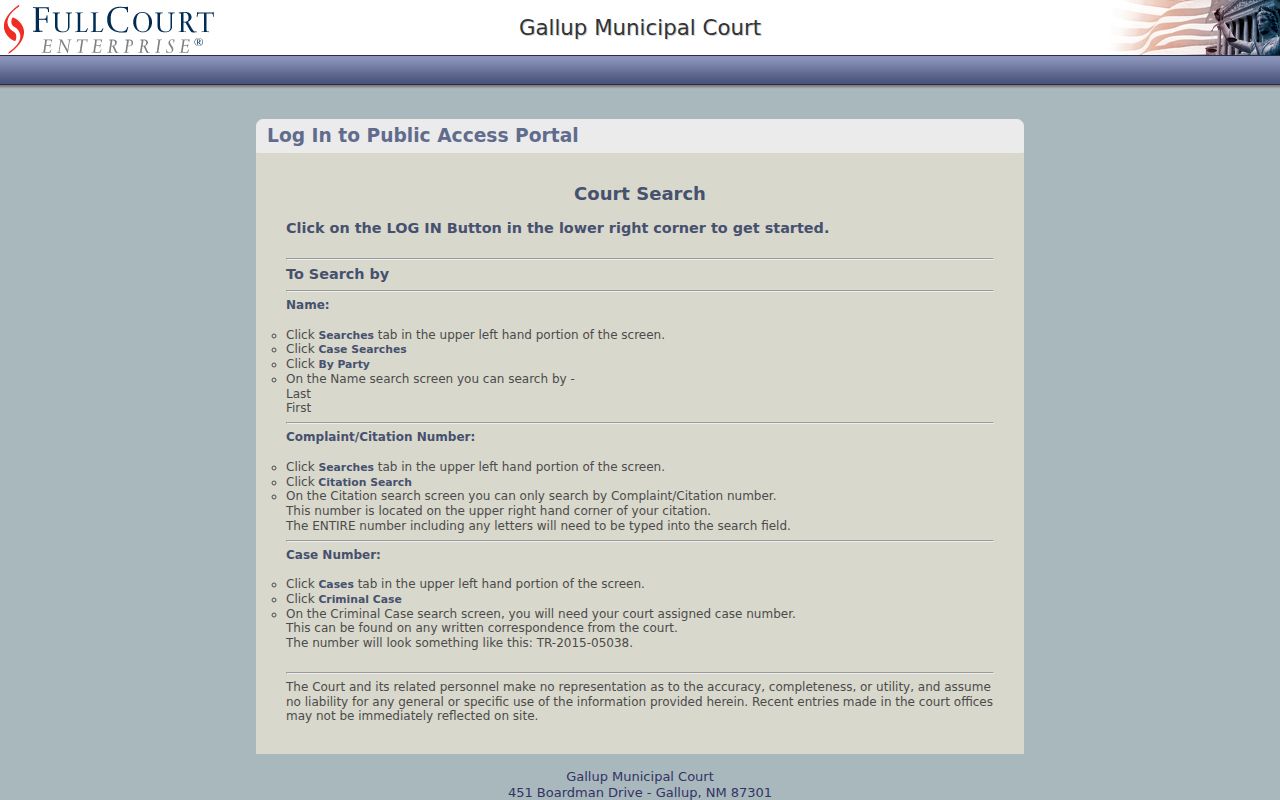
The Gallup portal is a city-specific access layer, not a replacement for the state-court record systems.
Who Can See Gallup Court Records
New Mexico Rule 1-079 treats court records as open. A rule, a statute, a court order, or a protected-information rule can change that. Even so, openness does not mean a public portal shows every field. Most Social Security, taxpayer, and financial-account data stays protected. Driver-license data stays protected too. So does every part of a birth date except the year. Sealed files and juvenile cases face added limits. So do adoptions, family matters, and mental-health material.
Gallup access rules:
New Mexico Inspection of Public Records Act provides the baseline for public-record inspection.
Rule 1-079 NMRA governs court-record inspection, protected information, and sealing.
Court IPRA is the judicial request route for a focused record request to the responsible court.
Gallup Court Records and City Scope
Gallup is the only incorporated city in McKinley County according to the Census source behind this page. Census QuickFacts gives Gallup a 2020 population count of 21,899. The 2024 estimate is 20,339. Two different vintages, in other words. Neither one measures court workload. The city designation is why the focus here stays on Gallup rather than stretching to every named county community as if each ran its own city court. For the record itself, Census QuickFacts for Gallup holds the population series, and the Census incorporated-place table backs the city-status check.
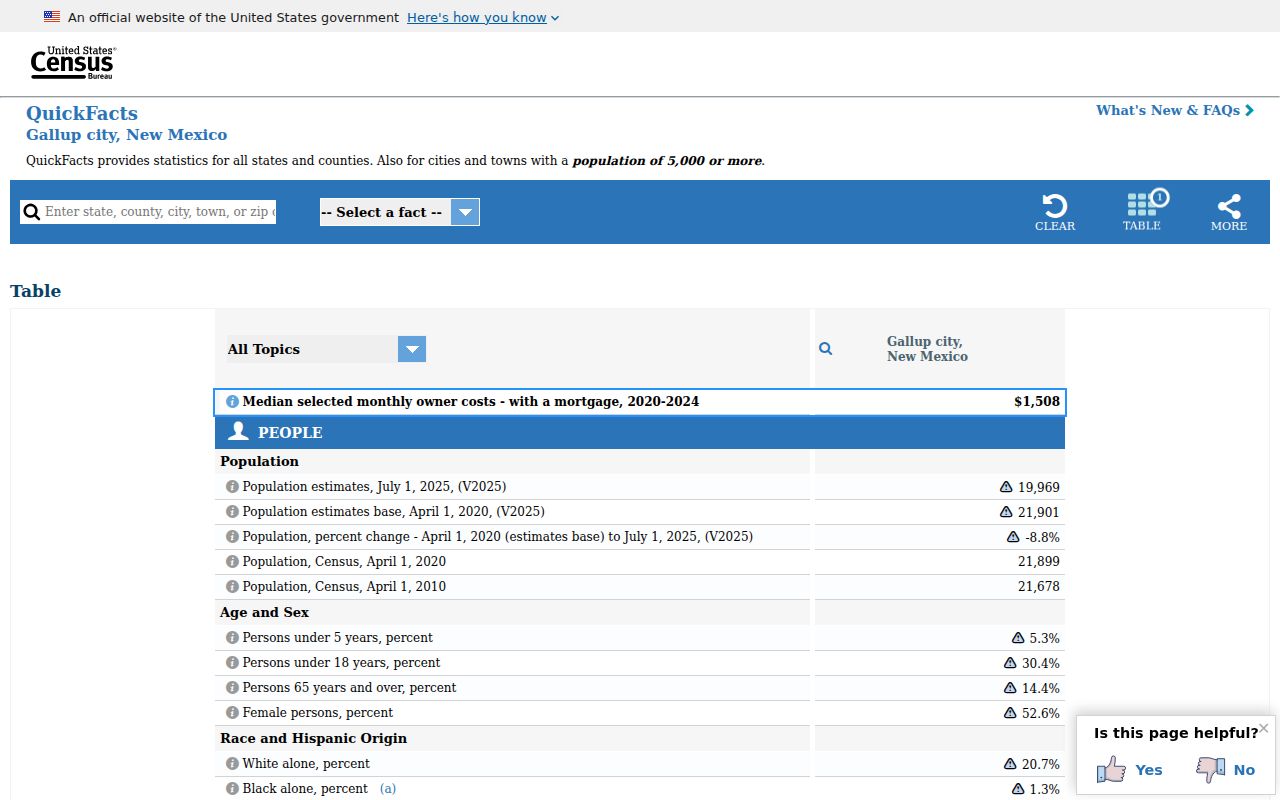
Population figures set the scene for Gallup court records. They do not suggest that every District or Magistrate case starts inside the city limits.
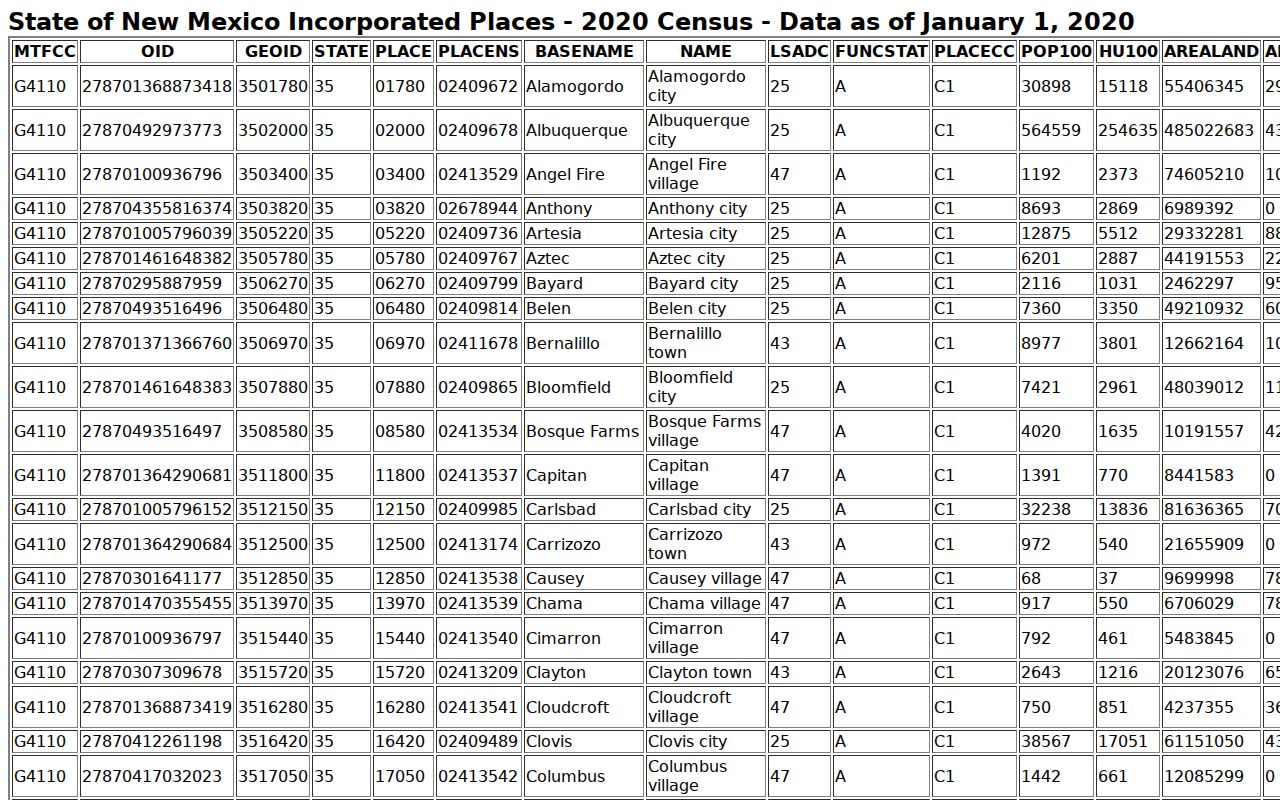
The incorporated-place source confirms the limited city-page scope for McKinley County.
Gallup Community Court Routing
Other McKinley County communities, chapter-house locations, and census-designated places have court-access needs too. None of them swaps in for a Gallup Municipal Court record, though. A community's name does not decide which office holds the file. For state traffic, criminal, civil, probate, and District Court matters, route the request by the court named on the notice. You can also go by the case record itself. Then confirm with that court's clerk before assuming you are in the right place.